Who This Book Is For
Most successful digital products today are conceived, designed, built, and delivered by a cross-functional team composed of product managers, designers, and software engineers. Product managers bring the business context—they help teams ensure that the products they are building are viable for the business. They ensure that the business that supports the product will survive over time, allowing the team to further satisfy customers’ needs. Designers bring visual, interactive, and systems-design chops that help to ensure that customers will understand how to best use a product and delight in that use. Software engineers bring the technical chops to ensure that the product is reliable, stable, and delivers on its promise. All three roles are critical to the success of any digital product. They are collectively responsible for ensuring that their products create value for the customer in a way that creates value for the business.
This book was written for product people (product managers, designers, and software engineers) who want to build products that their customers need and love. It outlines a collection of habits that, when deployed continuously week over week, lead to better business outcomes and better customer outcomes. These habits were designed to be adopted by a product trio composed of each of these roles. Throughout the book, the term “product trio” will refer to a product manager, a designer, and a software engineer working together to develop products for their customers.
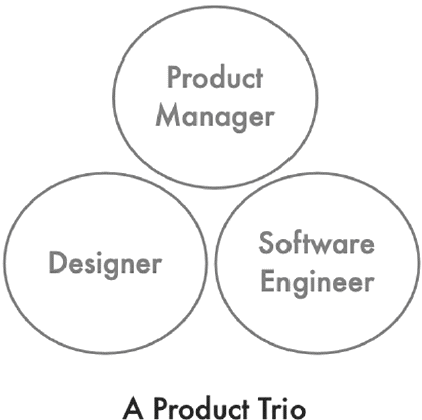
Now, most digital products require the input of more than three people. Most teams have several engineers contributing to the code base. Some teams have the luxury of having multiple designers or product managers contributing to the same product or unit of work. Additionally, most teams have other roles that contribute to the success of their product, including product marketers, data analysts, user researchers, and customer-success representatives, among others. Defining the product trio as I have done here is not meant to exclude any of these critical roles from the discovery process. Each team needs to define the right “trio” on their team to adopt these habits. I put trio in quotes because your trio might be a quartet or even a quintet.
As you read this book, if you choose to be more inclusive of who engages with these habits, just know that inclusion comes at a cost. The more folks involved in each decision, the longer it will take to reach that decision. You want to balance speed of decision-making with inclusiveness. For most teams, their trio needs to consist of at least a product manager, designer, and software engineer. For some teams it will make sense to add a fourth or even a fifth member to this decision-making squad. I trust you will use your best judgment to find what works best for your team.
And if you don’t work in a product trio right now, don’t worry—you can still adopt many of these habits today. But this book will encourage you to start thinking about how you can more closely collaborate with your cross-functional colleagues.
With your trio defined, let’s turn to the mindsets you’ll each need to develop in order to successfully adopt these continuous discovery habits.